
Introduction
The website working mechanism is the invisible system that makes every website function smoothly when someone opens it in a browser. Every time you type a web address, click a link, or submit a form, many things happen behind the scenes in just a few seconds. Understanding the website working mechanism is important for anyone who wants to build, manage, or grow a website. Even if you are not a developer, knowing how it works helps you make better decisions about hosting, speed, security, and content.
Many beginners think a website is just a few pages stored online. In reality, it is a combination of servers, networks, files, databases, and software working together. When all these parts communicate correctly, users get fast and smooth access to information. However, if any part fails, the website may load slowly or not open at all.
Learning the website working mechanism also helps you improve your site’s performance and user experience. When you understand what happens from the moment a visitor enters a URL to when the page appears on their screen, you can identify problems and fix them easily. In addition, this knowledge helps with SEO, security, and future upgrades.
In this guide, we will explain everything in a simple and clear way. You will learn what the website working mechanism is, why it matters, how it works step by step, and how you can use this knowledge to build better websites.
What is Website Working Mechanism?
The website working mechanism is the complete process that allows a website to display content on a user’s device. It includes how a browser sends a request, how a server processes it, and how the response comes back as a web page.
In simple words, it is how a website talks to your computer or mobile phone.
Whenever you open a website, three main parts work together:
- The user’s device
- The internet
- The web server
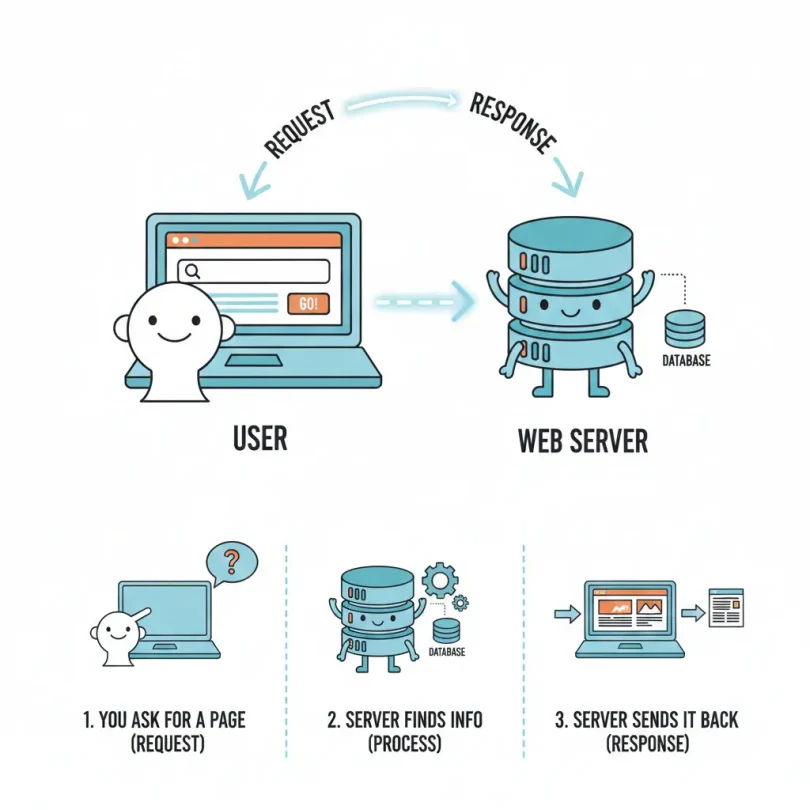
Your device sends a request through the internet. The server receives it, finds the required files, and sends them back. Your browser then shows those files as a website.
This entire cycle happens very fast, usually in less than a second. That is the core of the website working mechanism.
Why is Website Working Mechanism Important?
Understanding the website working mechanism is important because it affects how your site performs, looks, and stays secure.
Here are some key reasons why it matters:
- It helps you choose the right hosting service
- It allows you to improve website speed
- It supports better SEO performance
- It reduces technical errors
- It improves user experience
When you know how data travels from server to browser, you can optimize every step. This means your website loads faster, stays safer, and ranks better in search engines.
Detailed Step-by-Step Guide
Step 1: User Enters a Website Address
The process starts when a user types a web address into their browser. This address is called a URL.
Example:www.example.com
The browser now needs to find where this website is located on the internet.
Step 2: DNS Finds the Server

The browser contacts a system called DNS, which stands for Domain Name System. DNS acts like a phone book for the internet.
It converts the website name into an IP address that points to the correct server.
So instead of example.com, the browser gets something like 192.0.2.1.
Step 3: Browser Sends a Request
Now that the browser knows the server’s address, it sends a request to that server. This request asks for the website files.
This request travels across the internet through many networks until it reaches the server.
Step 4: Server Processes the Request
The server receives the request and looks for the required files. These may include:
- HTML pages
- Images
- CSS styles
- JavaScript files
- Database data
If the website uses a database, the server fetches the required information and prepares the final page.
Step 5: Server Sends the Response
After preparing the page, the server sends all required files back to the user’s browser.
This data travels through the internet just like the original request.
Step 6: Browser Builds the Page
When the browser receives the data, it starts building the website on the screen.
It does this by:
- Reading the HTML
- Applying CSS styles
- Running JavaScript
- Displaying images and text
Within seconds, the full website appears for the user.
This complete flow is the website working mechanism in action.
Benefits of Website Working Mechanism
Understanding and using the website working mechanism correctly provides many benefits.
- Faster page loading
- Better user experience
- Higher search engine rankings
- Improved security
- Easier troubleshooting
- Smooth website updates
- Better performance on all devices
When everything works properly, visitors enjoy using your website and are more likely to return.
Disadvantages / Risks
If the website working mechanism is not managed well, it can cause problems.
- Slow website speed
- Server downtime
- Security risks
- Data loss
- Broken pages
- Poor SEO results
These issues happen when hosting is weak, code is outdated, or security is ignored.
Common Mistakes to Avoid
Many beginners make mistakes when dealing with website systems.
Here are some common ones:
- Choosing very cheap hosting
- Ignoring website security
- Using heavy images without optimization
- Not updating software
- Forgetting regular backups
- Overloading the server
Avoiding these mistakes keeps your website healthy and fast.
FAQs
1. What is the main part of the website working mechanism?
The main part is the web server. It stores website files and sends them to users when requested. Without a server, a website cannot exist online.
2. Does internet speed affect website performance?
Yes, internet speed plays a big role. Slow internet makes requests and responses travel slower, which delays page loading.
3. Can a website work without a database?
Yes, simple websites can work with just HTML files. However, dynamic websites need databases to store user data, posts, and products.
4. What happens if the server is down?
If the server is down, users cannot access the website. The browser will show an error message instead of the website.
5. Is the website working mechanism the same for all websites?
The basic process is the same, but advanced websites use extra layers like caching, security checks, and load balancing.
6. How can I make my website faster?
You can make it faster by:
- Using good hosting
- Optimizing images
- Using caching
- Reducing heavy scripts
These steps improve how the website working mechanism performs.
Expert Tips & Bonus Points
Here are some useful tips to get the best results:
- Use reliable hosting
- Keep software updated
- Use content delivery networks
- Monitor server performance
- Regularly test website speed
- Secure your website with proper certificates
These steps improve reliability and user trust.
Conclusion
The website working mechanism is the foundation of every successful website. It controls how users reach your site, how data is processed, and how content is displayed. When this system works smoothly, visitors enjoy fast loading pages, secure connections, and a pleasant browsing experience. When it does not, even the best-designed website can fail.
By understanding how the website working mechanism works, you gain more control over your online presence. You can choose better hosting, fix problems faster, and optimize your website for search engines. This knowledge also helps you plan future upgrades and scale your site as it grows.
Whether you are running a blog, an online store, or a business website, the principles remain the same. Requests travel from users to servers and responses come back as web pages. Every step in this chain matters.
When you take time to learn and improve each part, your website becomes more reliable, faster, and more professional. In the long run, this leads to more visitors, higher trust, and better results for your online goals.