
Introduction
Web application frameworks are the backbone of modern websites and online platforms. From simple blogs to complex social networks, almost every dynamic website today relies on a structured framework to function smoothly. For beginners, the idea of using a framework may feel confusing at first. However, once you understand how frameworks work, development becomes faster, safer, and more organized. This is why web application frameworks are widely used by developers across the world.
In simple terms, a framework gives you a ready-made structure. Instead of writing everything from scratch, you use predefined rules, libraries, and tools. This helps you focus on building features rather than solving the same problems again and again. Web application frameworks also promote clean code, better security, and easier maintenance, which are critical for long-term projects.
As websites grow more interactive, the demand for scalable and secure applications increases. Web application frameworks solve these challenges by providing tested solutions for routing, databases, authentication, and performance. Whether you are creating a personal project or a professional application, learning how frameworks work will give you a strong advantage.
This guide is written in simple English and designed for beginners and intermediate readers. It explains web application frameworks step by step, covers their benefits and risks, and highlights common mistakes to avoid. By the end, you will clearly understand why frameworks matter and how to use them effectively in real-world projects.
What is Web Application Frameworks?
Web application frameworks are software platforms that help developers build web applications in a structured and efficient way. They provide a foundation with built-in tools, libraries, and conventions. Instead of writing repetitive code, developers follow the framework’s patterns to speed up development.
A framework usually handles common tasks such as URL routing, database interaction, user authentication, and form validation. This allows developers to focus on the unique features of their application. Web application frameworks also encourage best practices, which improves code quality and teamwork.
There are two main types of web application frameworks: frontend frameworks and backend frameworks. Frontend frameworks manage the user interface and user experience. Backend frameworks handle server-side logic, databases, and security. Some frameworks focus on one side, while others support full-stack development.
In short, web application frameworks act as a guide and toolkit. They reduce complexity, save time, and make web development more reliable for both small and large projects.
Why is Web Application Frameworks Important?
Web application frameworks are important because they solve real development problems efficiently. Building a web application without a framework often leads to messy code, security issues, and slow progress. Frameworks provide a clear structure that keeps projects organized.
One major reason frameworks matter is security. Most web application frameworks include built-in protection against common attacks. This makes applications safer without extra effort. Frameworks also improve performance by offering optimized tools and caching methods.
Another key benefit is scalability. As your application grows, frameworks help manage increasing users and data. They support modular development, allowing teams to work together smoothly. This is especially useful for businesses and startups.
Finally, frameworks save time and cost. Developers can build applications faster and maintain them easily. For beginners, frameworks also act as learning tools, teaching best coding practices through real usage.
Detailed Step-by-Step Guide
Step 1: Understand Your Project Requirements
Before choosing a framework, clearly define your project goals. Ask yourself what type of application you want to build. A simple website and a complex dashboard have very different needs.
Consider factors like performance, scalability, and security. Also think about your experience level. Some frameworks are beginner-friendly, while others require advanced knowledge.
Step 2: Choose the Right Type of Framework
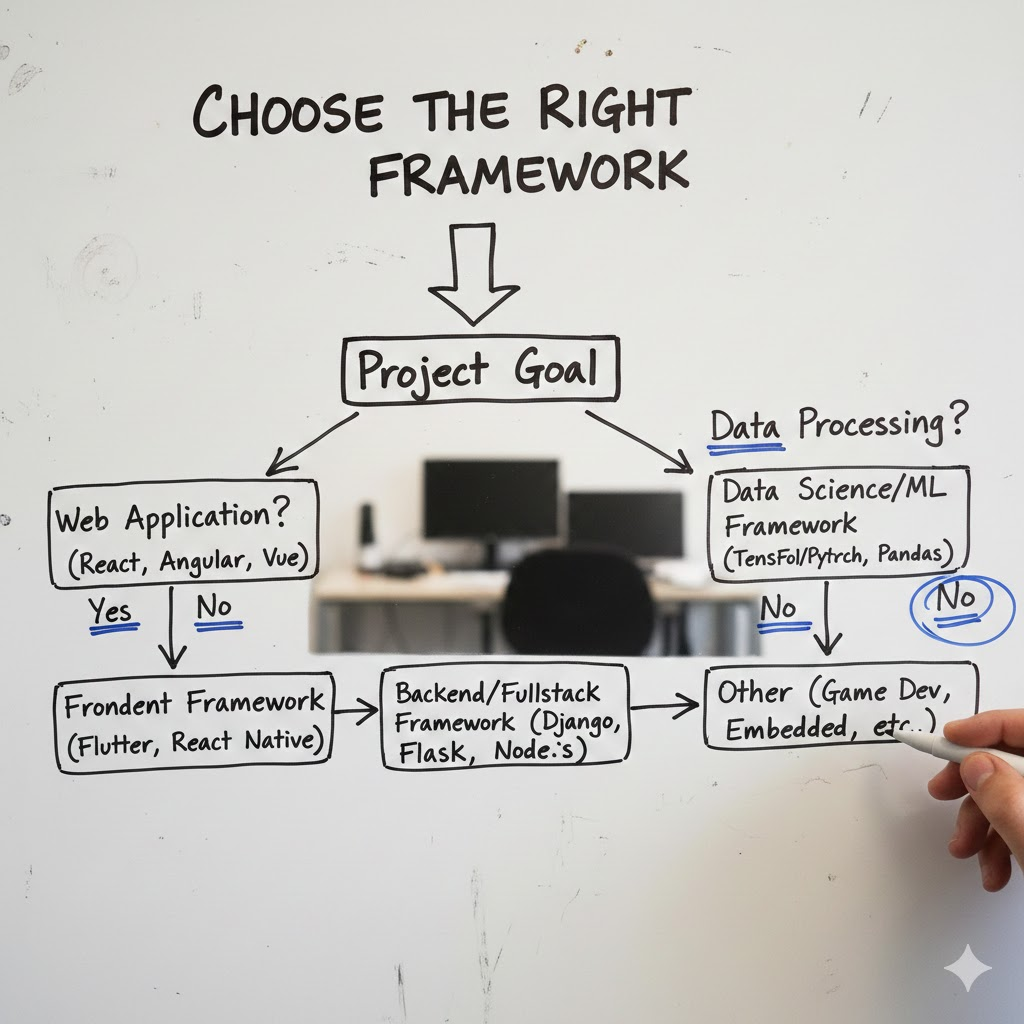
Decide whether you need a frontend, backend, or full-stack framework. Frontend frameworks focus on design and interactivity. Backend frameworks manage logic and data.
If your project is small, a single framework may be enough. For larger projects, combining frontend and backend frameworks is common practice.
Step 3: Learn the Core Concepts
Every framework has its own rules and structure. Learn its basic concepts such as routing, controllers, and templates. Understanding these ideas early will save time later.
Use official documentation and simple examples. Avoid jumping into advanced features too quickly. Strong basics make future learning easier.
Step 4: Set Up the Development Environment
Install the required tools and dependencies. Most web application frameworks require a package manager and a runtime environment.
Create a clean folder structure and configure basic settings. This step ensures your project runs smoothly from the start.
Step 5: Build a Simple Application
Start with a small project like a login system or a to-do app. This helps you understand how the framework works in real scenarios.
Focus on functionality, not perfection. Making mistakes at this stage is part of the learning process.
Step 6: Add Database Integration
Most web applications need data storage. Learn how your framework connects to databases. Practice creating tables, inserting data, and fetching records.
Use built-in tools for database management when available. This keeps your code secure and organized.
Step 7: Implement Security Features
Security is a critical part of web application frameworks. Learn how to handle authentication, authorization, and data validation.
Use the framework’s built-in security tools instead of custom solutions. This reduces risks and saves time.
Step 8: Optimize Performance
As your application grows, performance becomes important. Learn caching, code optimization, and efficient queries.
Frameworks often provide tools to monitor and improve performance. Use them wisely to ensure smooth user experience.
Step 9: Test Your Application
Testing helps identify bugs early. Learn how to write basic tests using your framework’s testing tools.
Regular testing improves reliability and confidence in your code.
Step 10: Deploy and Maintain
Once your application is ready, deploy it to a server. Learn basic deployment steps and environment settings.
After deployment, maintain your application by updating dependencies and fixing issues. Frameworks make long-term maintenance easier.
Benefits of Web Application Frameworks
- Faster development with reusable components
- Improved security through built-in protections
- Clean and organized code structure
- Easier maintenance and updates
- Better scalability for growing applications
- Strong community support and documentation
- Encourages best coding practices
Disadvantages / Risks
- Learning curve for beginners
- Overhead for very small projects
- Framework limitations may restrict flexibility
- Dependency updates can cause compatibility issues
- Performance overhead if misused
Common Mistakes to Avoid
One common mistake is choosing a framework without understanding project needs. This often leads to unnecessary complexity. Always match the framework to your goals.
Another mistake is ignoring documentation. Frameworks are powerful, but only when used correctly. Skipping basics causes confusion later.
Overusing features is also risky. Adding unnecessary plugins or modules can slow down your application. Keep things simple and focused.
Finally, neglecting security and updates is dangerous. Always apply updates and follow security guidelines provided by the framework.
FAQs
What are web application frameworks used for?
Web application frameworks are used to build dynamic websites and web applications. They provide tools for handling logic, databases, and user interactions efficiently.
Are web application frameworks good for beginners?
Yes, many frameworks are beginner-friendly. They offer clear structure and documentation, which helps new developers learn faster and write better code.
Can I build a website without a framework?
Yes, but it requires more effort. Frameworks simplify development, improve security, and reduce repetitive tasks.
Do frameworks affect website performance?
Frameworks can improve performance when used correctly. However, poor configuration or overuse of features may slow down applications.
How do I choose the right framework?
Choose based on project size, requirements, and your skill level. Research features, community support, and long-term maintenance needs.
Are web application frameworks secure?
Most frameworks include strong security features. Developers must still follow best practices to ensure full protection.
Expert Tips & Bonus Points
Start with one framework and master it before learning others. Deep knowledge is more valuable than shallow experience.
Always follow the framework’s conventions. This makes your code readable and easier to maintain.
Use version control to manage changes. This is essential for teamwork and long-term projects.
Keep learning through small projects. Practical experience strengthens understanding more than theory alone.
Conclusion
Web application frameworks play a vital role in modern web development. They provide structure, security, and efficiency, making it easier to build reliable applications. For beginners, frameworks act as guides that teach best practices. For experienced developers, they offer powerful tools to scale and maintain complex projects.
Understanding web application frameworks helps you work smarter, not harder. Instead of solving the same problems repeatedly, you rely on tested solutions. This saves time and reduces errors. Frameworks also promote teamwork by standardizing code structure and workflow.
While frameworks have a learning curve, the long-term benefits outweigh the challenges. Choosing the right framework and using it correctly can transform your development experience. From faster development to improved security, frameworks support every stage of a project.
As web technologies continue to evolve, frameworks will remain essential. Investing time in learning web application frameworks is a smart decision for anyone serious about web development. With practice and patience, you can use frameworks to build efficient, secure, and scalable applications that stand the test of time.