
Introduction
Understanding how online systems work is very important in today’s digital world. Every time you open a website, watch a video, send a message, or shop online, you are using an online system. These systems run behind the scenes to make everything smooth, fast, and secure. Yet most people use them without knowing what really happens when they click a button or type a web address.
In simple words, online systems connect users, devices, and servers to share information. They help data travel from your phone or computer to powerful machines called servers and then back to you. This happens in seconds. When you know how online systems work, you can use the internet more wisely and safely. You also gain a better understanding of online businesses, apps, and digital services.
This guide is written for beginners and intermediate readers. You do not need a technical background to follow it. Everything is explained in clear and simple English. We will cover what online systems are, why they matter, how they function step by step, and what benefits and risks they bring. By the end, you will have a strong idea of how online systems work and why they are such an important part of modern life.
Let us start by first understanding what an online system really means.
What is How Online Systems Work?
The term how online systems work describes the process of how digital platforms, websites, and apps operate over the internet. An online system is a group of connected computers, servers, and software that work together to provide a service. This service could be anything from sending emails to streaming movies or processing payments.
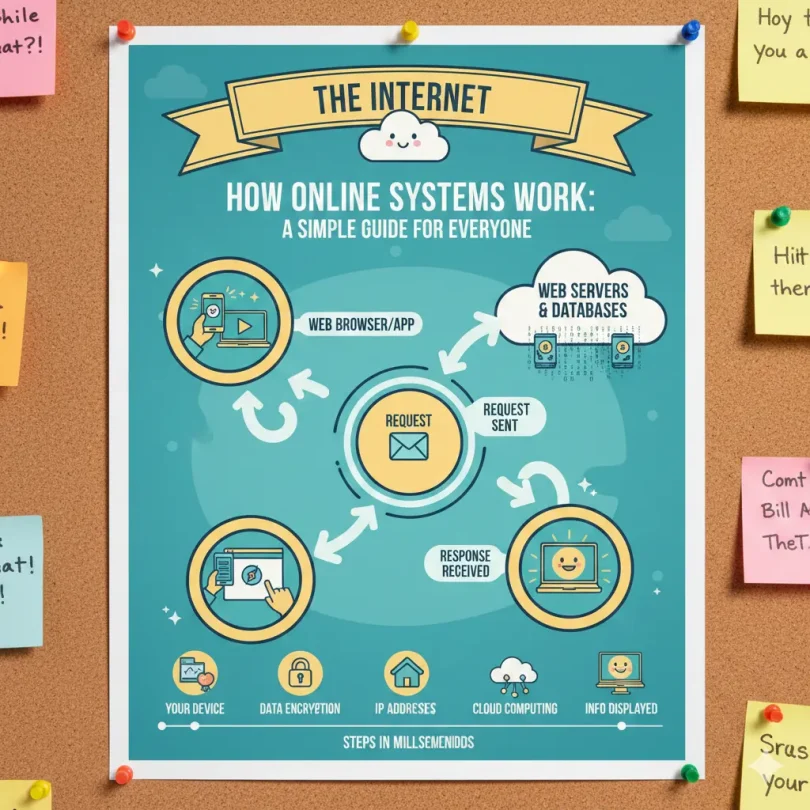
When you type something in a browser, your request is sent to a server. The server processes it and sends back the result. This back-and-forth communication is what makes online systems function. These systems rely on networks, databases, and programs that are designed to handle millions of users at the same time.
For example, when you log in to a social media website, the online system checks your username and password, finds your profile in a database, and then shows you your news feed. All of this happens in a few seconds because the system is built to work efficiently.
So, how online systems work is really about how data moves, how computers communicate, and how software manages information to give users what they need.
Why is How Online Systems Work Important?
Learning how online systems work helps people understand the digital world better. It is not only useful for developers or IT experts. It is useful for students, business owners, and everyday users.
Here is why it matters:
- It helps you stay safe online
- It improves your digital skills
- It supports smarter business decisions
- It builds trust in online services
When you know how data is stored and shared, you become more careful about privacy and security. You also understand why some websites are faster or more reliable than others. Businesses that understand online systems can serve customers better and grow faster.
In short, knowing how online systems work gives you control and confidence in the digital age.
Detailed Step-by-Step Guide
Understanding how online systems work becomes easy when we break it into steps. Let us look at each stage.
Step 1: User Sends a Request
Everything starts with a user action. You type a website address, click a button, or send a message. This creates a digital request. Your device prepares this request and sends it through the internet.
Step 2: Internet Transfers the Data

The request travels through many networks. It goes from your device to routers and then to the server that hosts the website or app. This journey happens in milliseconds.
Step 3: Server Receives the Request
The server is a powerful computer that stores data and runs programs. When it receives your request, it understands what you want, such as a web page, a login, or a file.
Step 4: Server Processes the Request
The server uses software to process your request. It may check a database, run a program, or verify information. For example, it may confirm your password or find a product you searched for.
Step 5: Server Sends a Response
After processing, the server sends back a response. This could be a web page, an image, a video, or a message. This data travels back to your device.
Step 6: Your Device Displays the Result
Your browser or app receives the data and shows it to you. You now see the website, message, or video you asked for.
This simple flow explains how online systems work in daily life.
Benefits of How Online Systems Work
Online systems bring many advantages to users and businesses.
- They allow fast communication
- They make global access possible
- They support online shopping
- They enable remote work
- They store large amounts of data
- They provide instant information
Thanks to how online systems work, people can learn, earn, and connect from anywhere in the world.
Disadvantages and Risks
While online systems are powerful, they also have some risks.
- Data privacy issues
- Cybersecurity threats
- System downtime
- Technical failures
- Dependence on internet access
Understanding how online systems work helps you manage these risks better.
Common Mistakes to Avoid
Many users and businesses make mistakes when dealing with online systems.
One common mistake is ignoring security. Using weak passwords or sharing personal data can cause problems. Another mistake is not updating software. Updates fix bugs and protect systems. Some people also trust every online source, which can lead to scams.
By learning how online systems work, you can avoid these errors and stay safer online.
FAQs
What is an online system?
An online system is a group of computers and software that provide services over the internet. It allows users to access information and perform tasks digitally.
How fast do online systems work?
Most online systems work in milliseconds. They are designed to handle requests quickly and efficiently.
Are online systems secure?
They can be secure if proper safety measures are used. This includes encryption, strong passwords, and regular updates.
Why do some websites load slowly?
Slow loading can happen due to weak servers, poor internet connection, or heavy content.
Can online systems fail?
Yes, like any technology, they can face errors or downtime. Good systems have backups to reduce problems.
How can I learn more about online systems?
You can learn through courses, tutorials, and practice by using different online platforms.
Expert Tips and Bonus Points
Here are some useful tips to understand how online systems work better.
- Always use secure connections
- Keep your software updated
- Learn basic digital skills
- Be aware of online privacy
- Use reliable platforms
These habits will help you enjoy the full benefits of online systems.
Conclusion
Learning how online systems work gives you a clear view of the digital world. From sending a simple message to running a large online store, everything depends on online systems. They connect users, devices, and servers to share information in a fast and organized way. When you understand this process, you use the internet more confidently and safely.
Online systems are the backbone of modern life. They support education, business, entertainment, and communication. However, they also come with risks, such as security and privacy issues. By knowing how online systems work, you can protect yourself and make better choices online.
This guide has shown you what online systems are, how they operate step by step, and why they are important. With this knowledge, you are now better prepared to navigate the digital world. Whether you are a student, a professional, or just a regular internet user, understanding how online systems work will always be a valuable skill.