
Introduction
The backend process of websites is the hidden engine that makes every modern website work. When you open a page, click a button, or submit a form, many things happen behind the scenes. These actions are not visible to users, yet they control how data is saved, how pages are loaded, and how secure everything stays. For beginners and even intermediate learners, understanding this process helps remove confusion about how websites really function.
Many people think a website is just design and text on a screen. In reality, that visible part is only a small piece. The real power sits in the backend process of websites, where servers, databases, and programs talk to each other. They decide what content you see, what results you get, and how fast your request is answered. Without a strong backend, even the most beautiful website would not work.
This guide explains the backend process of websites in simple English. You will learn what happens after you type a web address, how information travels, and how websites store and protect data. Each step is explained in a friendly and easy way so you can follow it without technical stress.
Whether you want to build your own site, work in web development, or just understand how online systems operate, this article will give you a clear picture. By the end, you will know why the backend process of websites is so important and how it keeps the digital world running smoothly.
What is Backend Process of Websites?
The backend process of websites refers to everything that happens on the server side of a website. It includes all the systems that users do not see but rely on every time they interact with a page. This includes servers, databases, programming logic, and security tools.
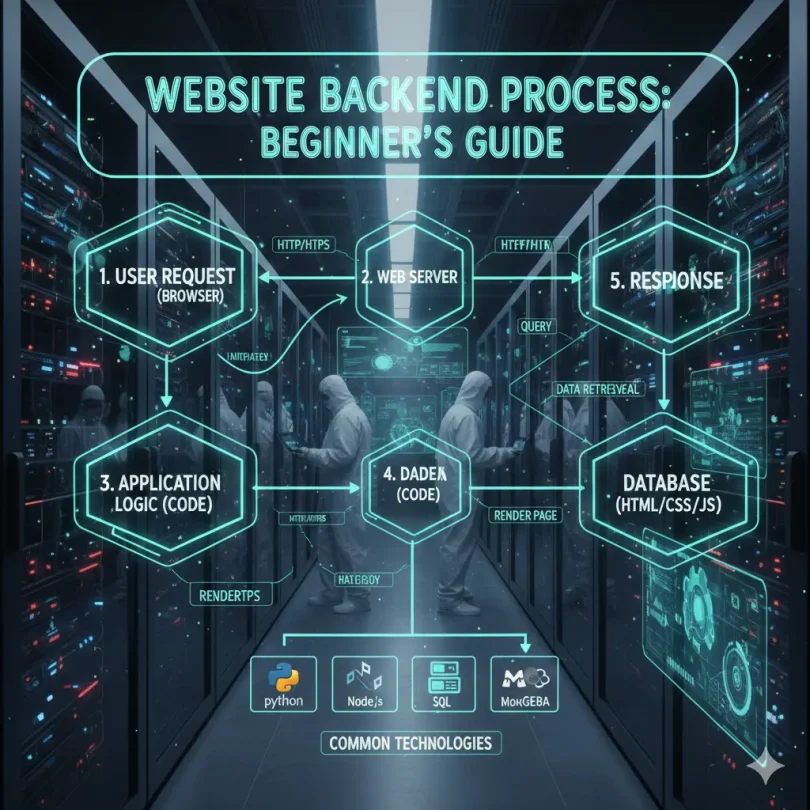
When you visit a website, your browser sends a request to a server. That server runs backend programs to decide what to do with your request. It may look up information in a database, check your login status, or process a form you submitted. After that, it sends the correct data back to your browser.
In simple words, the backend is the brain of a website. The frontend shows information, but the backend decides what information should be shown. The backend process of websites also handles tasks like user accounts, payments, content management, and data storage.
For example, when you log in to a website, the backend checks your username and password against stored records. If they match, it allows access. If not, it blocks the attempt. All of this happens through backend processes that keep the site working safely and correctly.
Why is Backend Process of Websites Important?
The backend process of websites is important because it makes websites useful, secure, and reliable. Without a backend, a website would be nothing more than a static page with no interaction.
Here are some key reasons why it matters.
First, it handles data. Every time you save a profile, post a comment, or place an order, the backend stores that information. Without this system, no data could be kept.
Second, it provides security. The backend process of websites controls user access, protects sensitive information, and blocks harmful activities. This keeps users safe and builds trust.
Third, it controls performance. The backend decides how fast a request is processed and how quickly data is sent back. A good backend makes a site feel smooth and responsive.
Finally, it allows growth. As a website gains more users, the backend process of websites can be scaled to handle more traffic, more data, and more features without breaking.
Detailed Step-by-Step Guide
Step 1: User Sends a Request
The process begins when a user types a website address or clicks a link. The browser sends a request to a server asking for specific information. This request includes details like the page needed and any data the user submitted.
Step 2: Server Receives the Request

The server receives the request and passes it to the backend system. This system checks what the request is about and which program should handle it.
Step 3: Backend Logic Runs
Here, the backend process of websites starts working. The server runs code that decides what to do. It might check if the user is logged in, validate form data, or prepare a database query.
Step 4: Database Interaction
If data is needed, the backend talks to the database. For example, it may fetch a user profile or save a new order. The database sends the result back to the backend.
Step 5: Data Processing
The backend then processes the data. It may calculate totals, apply rules, or format information into a readable structure.
Step 6: Response Is Created
After processing, the backend creates a response. This response includes all the information the browser needs to display the page correctly.
Step 7: Data Is Sent to Browser
The server sends the response back to the browser. The browser then shows the updated page or message to the user.
Step 8: User Sees the Result
The final step is when the user sees the result on their screen. All backend steps happen in seconds, making the process feel instant.
Benefits of Backend Process of Websites
- Allows websites to store and retrieve data easily
- Provides strong security for users and businesses
- Supports user accounts and personalized content
- Makes online payments and orders possible
- Helps websites grow without losing performance
- Enables complex features like search and filters
Disadvantages / Risks
- Can be expensive to set up and maintain
- Requires skilled developers to manage
- May face security threats if not protected
- Can slow down if not optimized well
- Needs regular updates and monitoring
Common Mistakes to Avoid
One common mistake is ignoring security. A weak backend can lead to data leaks and hacking. Always protect databases and user data.
Another mistake is poor database design. If data is stored badly, it becomes slow and hard to manage.
Many people also forget to test backend code. Errors in backend logic can break important features.
Finally, not planning for growth can cause problems. The backend process of websites should be built to handle more users in the future.
FAQs
What does the backend process of websites include?
It includes servers, databases, and server-side programs that manage data and requests. It handles everything users do not see but rely on.
Is backend development hard to learn?
It can be challenging at first, but with practice and simple tools, beginners can learn it step by step.
Why is the backend more important than the frontend?
Both are important, but the backend process of websites controls data, security, and logic. Without it, the frontend cannot work properly.
Can a website run without a backend?
Only very simple static sites can run without one. Most modern websites need a backend.
How does the backend keep data safe?
It uses security methods like encryption, access control, and validation to protect information.
What happens if the backend fails?
The website may stop working, lose data, or become unsafe. That is why monitoring and maintenance are needed.
Expert Tips & Bonus Points
Always design the backend with clear structure. This makes it easier to update and fix.
Use secure coding practices to avoid vulnerabilities.
Keep your backend process of websites optimized for speed and efficiency.
Regularly back up your data to avoid loss.
Monitor server performance to catch problems early.
Conclusion
The backend process of websites is the silent force that keeps everything running. While users only see pages and buttons, the backend is always working behind the scenes. It manages data, checks security, and delivers content exactly when needed. Without it, modern websites could not exist.
By understanding how requests travel, how databases store information, and how servers respond, you gain a deeper view of how the web works. This knowledge is helpful whether you are a student, a business owner, or someone curious about technology. The backend process of websites connects all the parts into one smooth system.
As websites continue to grow more complex, the role of the backend becomes even more important. It supports new features, handles more users, and keeps information safe. Learning about it now prepares you for the future of digital platforms.
In the end, every click, login, and purchase depends on a reliable backend. With the right design and care, the backend process of websites will keep powering the online world for years to come.